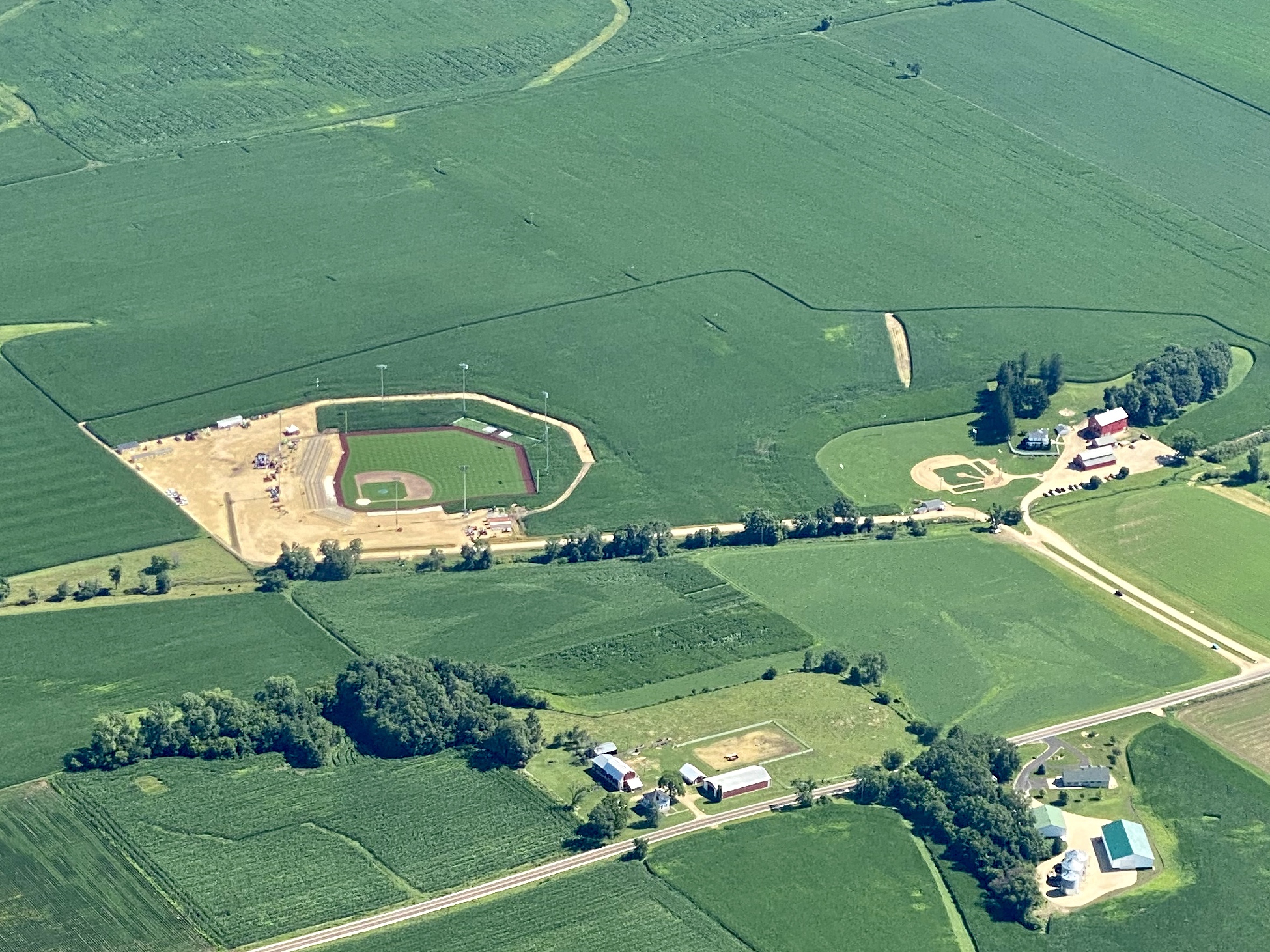
 Photo: H. Michael Miley / CC BY-SA 2.0
Major League Baseball returned to an Iowa cornfield Thursday night because apparently the one thing America still trusts is nostalgia with excellent production values.
The Phillies beat the Twins 7-1 in Dyersville, at the site made famous by Field of Dreams, and Kyle Schwarber supplied the part no producer had to script. He homered twice, including a leadoff shot on the third pitch of the game, while Aaron Nola struck out nine over five innings and earned his first win since May 26.
That was the baseball. Around it, MLB built the sort of emotional theme park that would make Disney ask whether everybody was feeling all right.
Hall of Famers emerged from the corn. Barry Bonds talked about his late father, Bobby. Roger Clemens and his son Kody, who was actually playing second base for Minnesota, recreated the movie's father-son catch after the game. If you were still emotionally intact by then, somebody in a control room had clearly missed a cue.
None of this is accidental. Field of Dreams has always been baseball's preferred evidence that the sport is not merely a commercial product but a hereditary condition transmitted between fathers, sons and people who own expensive throwback jerseys. The original 1989 film turned a ballfield in Iowa into a shrine. MLB turned the shrine into an event in 2021, returned in 2022, then came back this week for a third edition.
This time Netflix was waiting in the corn.
The streamer has a three-event MLB package that includes Opening Night, the Home Run Derby and Field of Dreams. The deal is reportedly worth about $50 million per season over three years. That is a useful reminder that when modern sports say they are reconnecting with their roots, those roots now have global distribution rights.
It is also a neat solution to the modern live-sports business. Networks and streamers are desperate for programming people still watch when it actually happens. Baseball, meanwhile, has an enormous inventory problem: 162 games per team and only so many of them can be sold as national occasions. So you manufacture scarcity. Put one game in a cornfield, give it a movie soundtrack, and suddenly Thursday in August has a dress code.
And yet the irritating thing is that it works.
Baseball is uniquely good at selling you something you already owned emotionally. The sport can spend eleven months arguing about payrolls, regional sports networks, pitch clocks, gambling investigations and whether anybody under 40 can find the game they want to watch. Then it puts a diamond next to a cornfield, lets a few old players walk slowly out of the crops and suddenly everyone is calling their dad.
Even the game cooperated. Schwarber, a player constructed almost perfectly for this setting, sent two balls toward the corn while the Phillies pulled away. Brandon Marsh homered too. Nola, whose season has not exactly been a pastoral poem, found his best night in months. Minnesota contributed one run and the useful dramatic function of being present.
The contrast is what makes the whole thing so American. A movie about resisting financial pressure and listening to a mysterious voice in a cornfield has become a premium sports property carried worldwide by one of the largest entertainment companies on earth.
Build it, and they will come.
Package it properly, and they will subscribe.