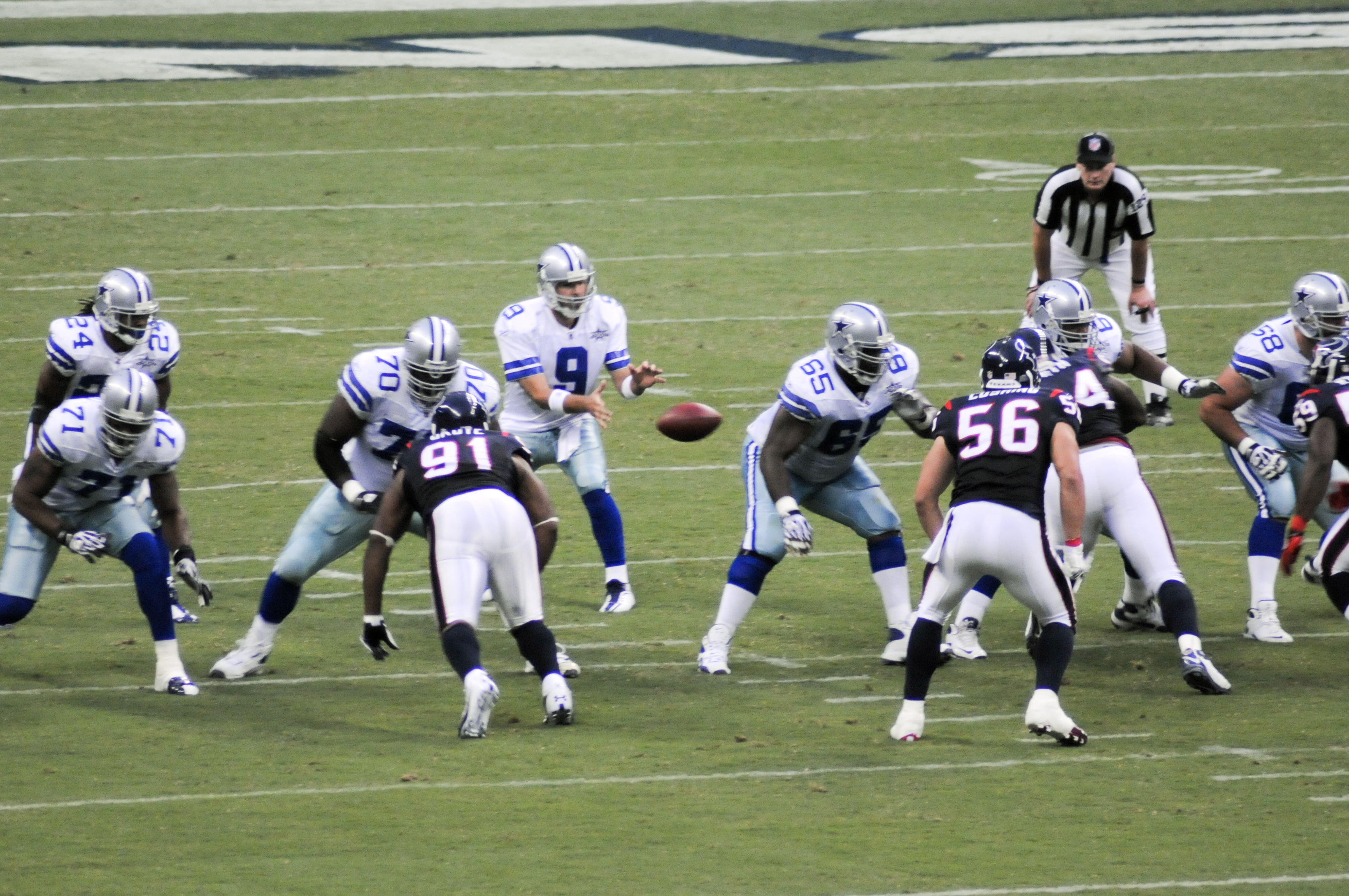
 Photo: MC Glasgow / CC BY 2.0
Tony Romo built his second career by seeing the future a few seconds early. Now CBS is discovering the limits of the gift.
The network says there is no timetable for deciding Romo’s future after his July 23 arrest in Milwaukee on suspicion of operating while intoxicated. CBS placed its lead NFL analyst on indefinite leave, and J.J. Watt has moved into the top booth with Jim Nantz and Tracy Wolfson. The NFL season is approaching; the network has a depth chart. What it does not have is an ending.
That is an unusual position for a television operation built around certainty. Every Sunday, CBS sells the NFL as a controlled national ritual: kickoff times, sponsor reads, camera angles, theme music, then somebody in a blazer explains why the chaos was actually inevitable. Romo became extraordinarily valuable because he could do that before the chaos happened.
When he arrived at CBS in 2017, straight from the Dallas Cowboys, he sounded less like a broadcaster than a quarterback who had accidentally left his headset on. He identified formations, anticipated routes and sometimes announced what was coming before the snap. Jim Nantz dubbed him “Romo-stradamus.” Viewers loved the feeling that someone had smuggled the offensive meeting room onto network television.
CBS loved it enough to give him a record-setting contract in 2020, widely reported at $180 million over 10 years. That deal helped turn the analyst chair into another position where networks hunt recognizable former stars and pay for the hope that fame will survive contact with live television.
Romo’s own broadcasting arc has already had a very Cowboys shape to it: immediate national fascination, enormous expectations, endless discussion about whether the performance still matches the mythology. The early clairvoyance eventually became familiar. His excitement, once treated as refreshing, became polarizing to some viewers. Even before the current issue, Romo had reached that rare level of sports fame where people were no longer merely listening to the broadcast; they were reviewing Tony Romo while Tony Romo reviewed the game.
Now the network has a problem no telestrator can solve.
According to the Milwaukee County Sheriff’s Office arrest report, Romo was stopped on Interstate 43 and was taken into custody after performing poorly on standardized field sobriety tests. He was booked and released. Wisconsin generally treats a first-offense OWI as a civil matter rather than a criminal offense. Romo has a court date scheduled for September 21. Reuters has reported that he denied drinking; authorities also cited him over an open alcohol container found in the vehicle.
Those details matter because this is an unresolved legal matter, not a completed morality play. CBS Sports president David Berson has said the network is still evaluating an “evolving situation” and considering the impact on CBS’s image and brand.
Television executives use “brand” the way football coaches use “execution”: as a word that sounds precise while politely refusing to reveal the playbook.
In the meantime, Watt gets the chair. That creates its own strange symmetry. Romo became the broadcasting prototype for skipping the apprenticeship and going straight from famous player to premium microphone. Watt, another enormously marketable former star, now inherits the biggest assignment on CBS because the man who helped normalize that shortcut is unavailable.
There is no need to invent a verdict before either the court or CBS reaches one. The story is interesting enough without it. Romo spent nine seasons telling millions of Americans what the quarterback was about to do, and CBS paid him a fortune because he so often seemed to know.
Now the most famous predictor in football has reached fourth-and-long, and for once nobody in the booth is calling the play.